October 2026 Newsletter
In Loving Memory of Dr. Joe Calvin Yelderman, Jr.
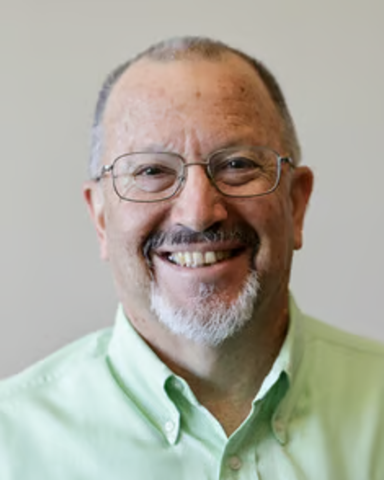
Dr. Joe Calvin Yelderman Jr., beloved professor, mentor, husband, father, and grandfather, passed away peacefully on August 9th surrounded by his family.
A Baylor graduate who served as a professor of geology for 43 years, Joe was a gifted educator and hydrogeologist whose passion for teaching, environmental stewardship, and his Christian faith touched generations of students and colleagues.
He is survived by his wife of 51 years, Diane, their three children, and 10 grandchildren.
It’s Official: Earth & Environmental Sciences Unite!
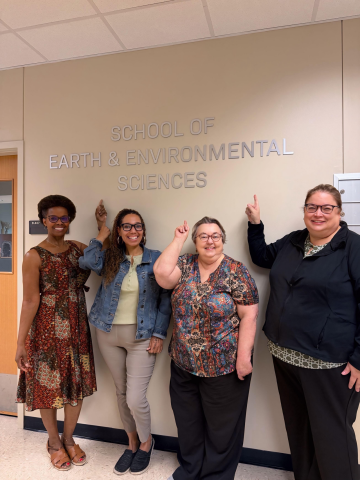
A new chapter is beginning at Baylor! The Environmental Science and Geosciences departments have come together as one, and the new School of Earth & Environmental Sciences nameplate makes the merge official. We’re excited for what this collaboration will bring—new opportunities, stronger connections, and a shared commitment to understanding and protecting our planet.
Congratulations to the Baylor Earth & Environmental Sciences Department on your continued achievements and impact!
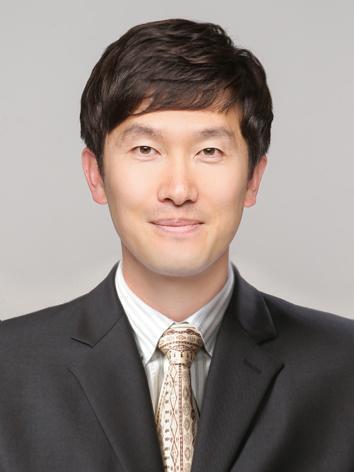
Dr. Hyeong-Moo Shin received a new NIH/NIEHS R21 grant for the project “Prenatal Exposure to Lithium and Autism Spectrum Disorder,” investigating whether prenatal exposure to low levels of environmental lithium is associated with autism and related neurodevelopmental outcomes.
The award expands the Shin Lab’s NIH-funded research on modifiable environmental factors that may contribute to autism and child neurodevelopment.
Dr. Shin Appointed to EPA Science Advisory Committee on Chemicals
Dr. Shin was appointed to the U.S. Environmental Protection Agency’s Science Advisory Committee on Chemicals (SACC), which provides independent scientific advice on chemical risk assessments under the Toxic Substances Control Act. He contributes expertise in environmental epidemiology, exposure assessment and modeling, and quantitative risk assessment.
Shin Lab Postdoctoral Fellows Secure Faculty Positions
Two former Shin Lab postdoctoral fellows, Dr. Jeong Weon Choi and Dr. Jiyun Lee, began appointments as assistant professors at Soonchunhyang University and Yongin University in South Korea.
Their transitions to independent faculty positions mark an important career milestone and highlight the Shin Lab’s commitment to mentoring early-career researchers toward successful academic careers.
Faculty Research & Lab Highlights
Emerging Research Program on Drinking-Water Lithium and AD/ADRD
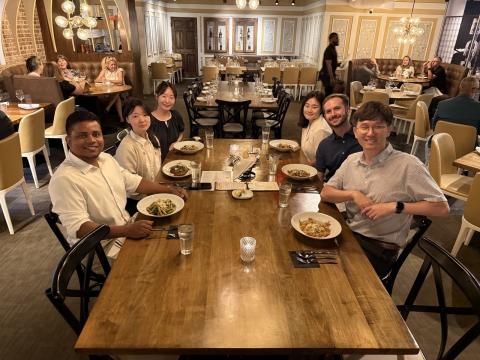
The Shin Lab is expanding research on environmental determinants of brain health, including the potential effects of low-level lithium exposure in drinking water on dementia risk.
Building on work led by doctoral student Se-Hyun Hwang, the team is using NIH All of Us data to investigate environmental lithium exposure, Alzheimer’s disease and related dementias (AD/ADRD).
Emerging Research on Micro- and Nanoplastics and Neurodevelopment
The Shin Lab is developing a new research direction focused on prenatal and early-life exposure to micro- and nano plastics and child neurodevelopment.
Recent work led by Dr. Jiyun Lee reviewed evidence linking these exposures to autism-relevant neurodevelopment and supports ongoing research in the area.
ES&T Cover Feature
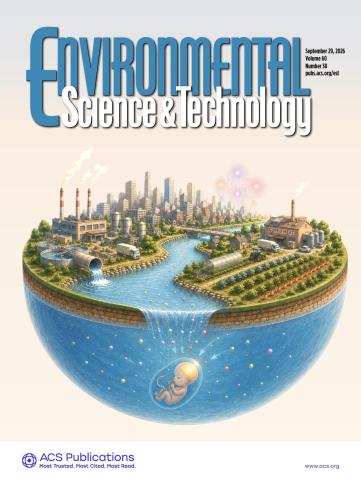
Dr. Hyuna Jang and Dr. Hyeong-Moo Shin lead research that examines prenatal exposure to perchlorate, thiocyanate, and nitrate and child neurodevelopment. The MARBLES prospective cohort was published in Environmental Science & Technology. The artwork associated with the study was selected as a Supplementary Cover of the journal.
SEES Student Achievements
Graduate Student Highlight: Hyuna Jang Publishes Two First-Author ES&T Papers
Doctoral student Hyuna Jang has published two first-author research articles in Environmental Science & Technology.
Her research uses the MARBLES prospective pregnancy cohort to investigate prenatal environmental exposures, maternal thyroid function, and child neurodevelopment, including studies of PFAS and the sodium/iodide symporter inhibitors perchlorate, thiocyanate, and nitrate.
SEES PhD Students & Candidates Recognized for Excellence in Research and Teaching
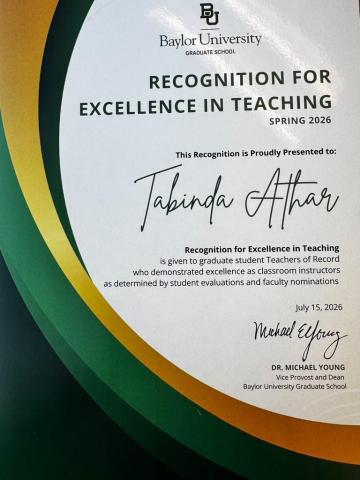
Tabinda Athar, a PhD candidate in the Microbial Biogeochemistry lab, was recognized for Baylor's Excellence in Teaching.
Additionally, Sini Macheri and Aishwarya Bhattacharya received awards from the C. Gus Glasscock, Jr. Endowed Fund for Excellence in Environmental Science.
Student Research and International Conference Presentations
Shin Lab students continue to present their research at major national and international conferences.
Recent presentations include Se-Hyun Hwang’s research on drinking-water lithium and dementia, Hyuna Jang’s work on prenatal environmental exposures and child neurodevelopment, and Luke Calder’s research on prenatal organophosphate ester exposure and early cognitive development in the MARBLES cohort.
SEES Student Fieldwork Highlights
Baylor Student Tracks Trinity Aquifer Water Levels for Local Groundwater District
Bailey Voight, a SEES undergraduate intern with the Southern Trinity Groundwater Conservation District, measures water levels each month with staff Wayne Hamilton at two municipal wells in McLennan County to monitor the Trinity Aquifer. The internship teaches students practical skills such as accurate field measurements, data analysis, identifying unusual results, and verifying findings with independent records. The program has been renewed for 2027 and welcomes students and faculty interested in learning more about groundwater and water-level monitoring.
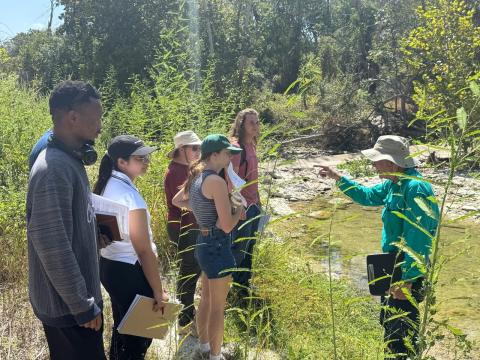
GEO 4341 students read a near-record flood at Hog Creek
Students in GEO 4341, Introduction to Hydrology, visited the USGS stream gauge on Hog Creek to examine how rainfall becomes streamflow. Using rainfall and discharge data, they found that ordinary storms produce relatively little runoff, while the May 2024 flood showed how saturated ground can dramatically increase runoff—even when daily rainfall is not extreme. The lab connected field observations with Python-based data analysis and highlighted the importance of antecedent moisture in flood forecasting, water resources, and hydrology. Students interested in hydrology, water resources, or applied field work are encouraged to contact Dr. Somos.